How to Stay Safe in an Airport Environment
Airports are inherently dangerous spaces
Heavy machinery, ground vehicles, fuel, etc. all create an environment that commands utmost respect. My goal with this section is to not scare you, but give you information that allows you to respect the airport environment, rather than fear it. In doing so, we can create a safety culture that protects us, our passengers, and the aircraft. Therefore, I have chosen How to Stay Safe in an Airport Environment as the first topic you can read about.
What Is Safety Culture?
What does safety culture mean in our context?
Safety culture is the shared set of values, beliefs, attitudes, and behaviors within an organization or group that collectively determines how seriously safety is prioritized-- especially when no one is watching, and especially when safety competes with other pressures like scheduling, cost, or convenience.
The key word in safety culture is culture rather than rules. Rules are external concepts that tell you what to do. culture is internal to an organization and dictates what people actually do in an airport environment, and why. An organization can simultaneously have perfect written safety procedures and terrible safety culture.
A strong safety culture typically has a few key components:
- Leadership commitment
- Psychological safety
- Just culture
- Continuous improvement
- Personal responsibility to upholding safety culture
- Resistance to normalization
How does the FAA view safety culture?
The FAA addresses safety culture most formally through is Safety Management System (SMS) framework. The FAA describes safety culture as having several core components:
- Informed culture: allows an organization to effectively use relevant information which ensures informed management decision-making.
- Flexibility: allows an organization to use information effectively to make changes that reduce operational risk.
- Learning: allows an organization to learn from its own (and other organizations) failures through data analysis and performance assessments.
- Reporting: allows an organization to implement policies and processes to encourage open reporting of errors or safety concerns without fear of punishment from the reporter.
- Just culture: allows an organization to harbor a work environment where people are treated fairly and actively encouraged to report safety concerns and share safety information openly.
To learn more about FAA safety culture follow this link
How To Stay Safe Around A Helicopter
The Four Dangers
A helicopter has four potentially dangerous parts: the main rotor, the tail rotor, the engine exhaust, and fuel
- Tail Rotor - The Deadliest Hazard
The tail rotors of a helicopter move at a much higher speed than the main rotor, rendering them practically invisible. On the Robinson R22 specifically, the tail rotors are spinning at 3394 RPM and will kill someone instantly. This makes approaching a helicopter from the rear incredibly dangerous, since you may not realize the danger before its too late. Additionally, when approaching a helicopter from the rear, you are invisible to the pilot (more on this below). image of r22 invisible tail rotor - Main Rotor - Low Blade Hazard
When in the vicinity of a helicopter, never raise your hands or any other objects above shoulder height. In 1996, a U.S. Army flight surgeon was killed instantly when he was struck in the head by a turning main rotor blade on a UH-60 Blackhawk helicopter1. - Engine Exhaust
- Fuel
How to Safely Approach or Depart a Helicopter
In order to safely approach or depart a helicopter, we can use the clock system: imagine a top down view of a helicopter on a watch face with the nose pointing at 12, and the tail pointing at 6. The safest zones to approach are 10 o'clock and 2 o'clock. Never, under any circumstance, walk behind a helicopter with its rotors turning. If you need to move to the other side of the aircraft, always go around the front. Even if the engine has just been shut down and the blades are slowing, the tail rotor still poses a danger to anyone brave enough to get close to it.
Three zones can be defined around a helicopter on the ground:\
- Safe Zone - the two areas at each side of the helicopters body (10 and 2 o'clock)
- Caution Zone - the area extending from the pilot forward
- Hazard Zone - the area extending rearward from the main body to the tail rotor; this should always be avoided. image of safety and danger zones
Helicopter Ramp Safety
A helicopter ramp is the paved surface area at a heliport or airport where helicopters park, load/unload passengers or cargo, refuel, and are serviced.
General Rules Around the Helicopter Ramp
Helicopter ramp rules will change depending on the standard operating procedures of the operation you are flying for. That being said, below are some general rules that I think everyone should follow while on the ramp.
Don't run!
Stay on paved surfaces, unless it's critical to your role
How to Brief Passengers
Briefing passengers is essential to keeping them safe. As we've established, helicopters can and will kill you if you act before thinking. As pilots, we are responsible with ensuring that our passengers know the hazards associated with helicopters. Below are some essentials that I think a passenger should be briefed on before the flight.
Before even getting onto the ramp
- Ensure that the passenger understands to never approach or depart the helicopter unless escorted by the pilot or ground crew.
- Instruct the passenger to ONLY approach/depart from the front of the helicopter within the view of the pilot. NEVER from the rear near the tail rotor.
- On sloped ground, passengers should approach from the downhill side.
- Wait for the pilots signal before moving toward the aircraft. This could be something like a nod up and down.
Boarding and seating
- Passengers should keep their head low and duck under the main rotor disc, even when blades are slowing down
- Ensure that passengers know that they should secure all loose items before boarding. Hats, scarves, bags, anything that could become a projectile or FOD which could damage the tail rotor.
- Passengers should fasten their seat belt immediately when entering the helicopter and ensure that they don't touch any controls when doing so.
- Passengers should be briefed on how to safely unlatch and latch the door from the inside. Passengers should also be briefed to not operate the door latch in flight
Emergency
- Explain that in the event of an emergency, remaining calm is the most important thing. Explain that hysterics don't help your ability to deal with the emergency.
- Explain that in an emergency, they should wait for your command before exiting the aircraft. Post crash, a rotor can still be spinning.
In-Flight
- Keep hands and feet of the controls at all times. Don't touch any switches or controls unless you explicitly tell them they can (e.g. A/C control)
- If they are scared or startled, don't grab anything. Keep hands on lap or hand hold.
- If they feel ill, let you know immediately.
Communication
- How to use the intercom
- Simple signal if they cant communicate (thumbs up or thumbs down)
- Reassure them about normal sounds and sensations. Helicopters are unfamiliar machines for non-pilots so notify them about the feeling of translational lift, turbulence, etc.
- Sterile cockpit should be maintained during critical phases of flight. I would say something like this to my passengers: "During takeoff, landing, and any time I seem focused or busy, please hold off on questions or conversation. I'm not trying to be rude, I'm just focusing on keeping us safe. Ill let you know when were in cruise and its a good time for us to chat. If something ever feels wrong to you, please speak up, but otherwise follow my lead". Additionally, during spin-up I would brief a passenger on what keying the mic sounds like and if they hear the mic key to stop talking because you are contacting someone on the radio.
Fuel Safety
As helicopter pilots we are more likely than fixed wing pilots to be refueling our aircraft. It's pretty likely that sometime in your future you'll be digging up an oil drum full of JET-A in the middle of the bush to refuel your helicopter. All fuel products that we encounter as pilots are extremely dangerous when handled improperly. Therefore, we want to ensure that we are protecting ourselves as best as we can when interacting with fuel. Below is a list of general rules I use when handling fuel:
- Always wear chemical resistant gloves when handling fuel
- NEVER smoke or vape within 50 ft of any aircraft being fueled
- Always ground the aircraft before fueling. Static electricity buildup from flight is very real and could end in disaster if an aircraft is not grounded correctly.
- Always ensure you are using the correct fuel type for your aircraft
- Unless the POH specifies it, no refueling while the aircraft is running.
- No fueling while passengers are on board.
- Always stay at the aircraft when fueling, never walk away
- Watch for spills and clean any up before flight
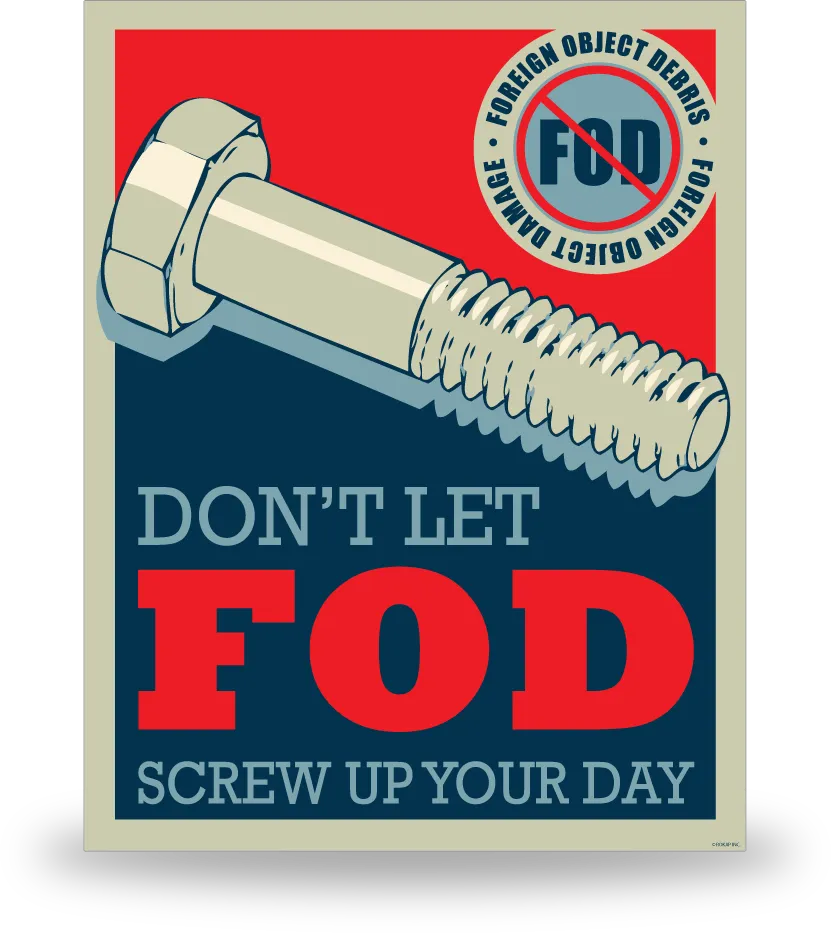
Foreign Object Debris (FOD)
Foreign Object Debris or FOD is any loose material on the ramp surface that could potentially ingested into an engine, strike a rotor blade, damage aircraft components, or injure someone. Things like:
- Rocks, gravel, dirt, and loose pavement
- Loose hardware e.g. nuts, bolts, safety wire
- Plastic bags, paper, or packing materials
- Tools left behind after maintenance
For helicopters specifically, FOD presents a serious hazard because the main and tail rotor wash during startup, pickup, and shutdown and pick up debris and throw it around the ramp. FOD can be sucked into the Tail Rotor, flung into people, or sucked into our engine intake.
In trying to establish safety culture, understanding what FOD is and recognizing its presence on the ramp is paramount. Therefore, you should make it a priority to look out for FOD when completing your preflight action. Depending on the standard operating procedures of the helicopter ramp you are at, you may have to notify ramp operator employees or your certified flight instructor to the presence of FOD so they can properly dispose of it.